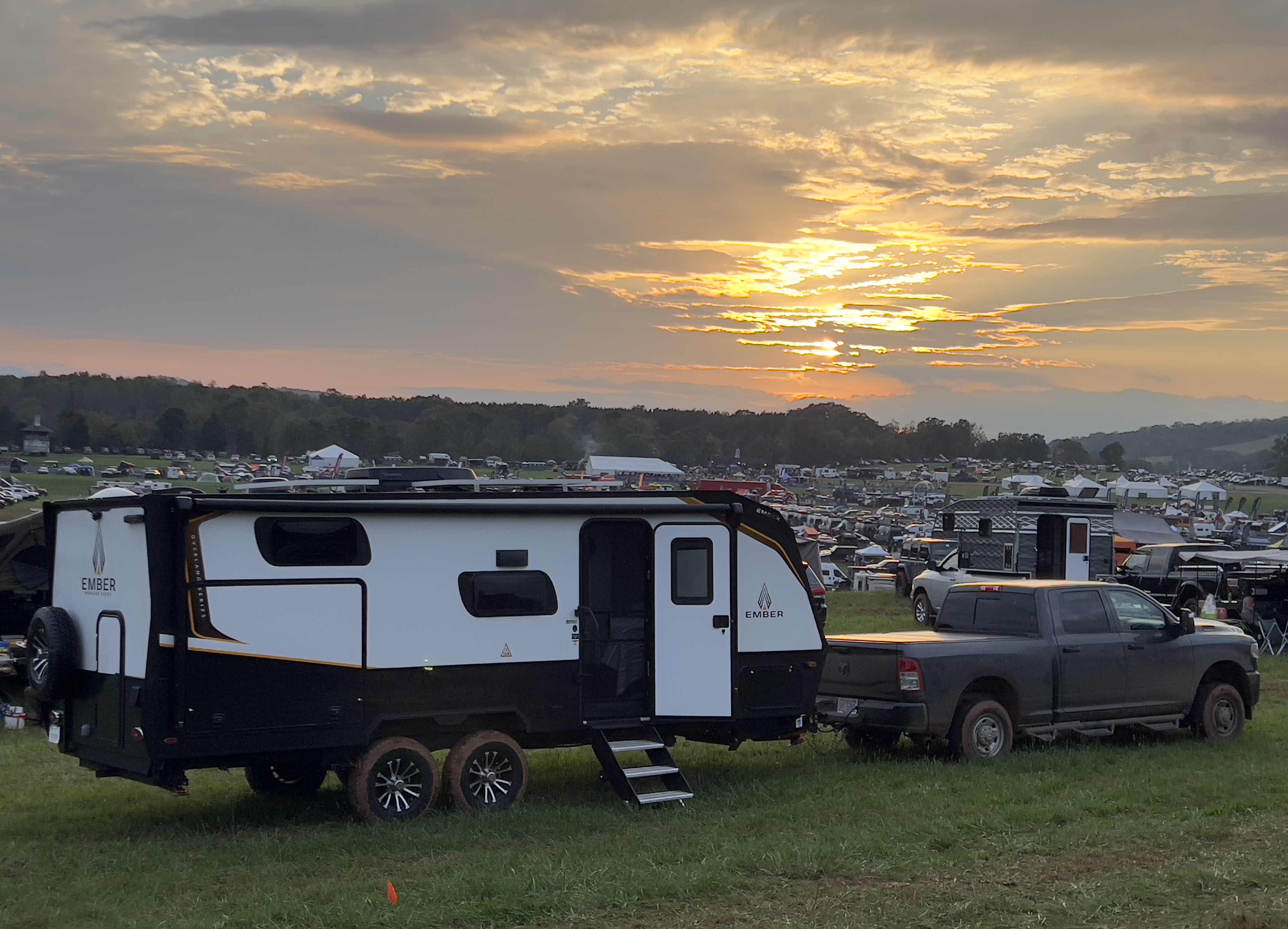
Self-sufficient camping, serious gear, and one mud hole that humbled 15,000 pounds of optimism.
Overlanding is camping with a little more independence, a lot more gear, and the quiet understanding that if something goes wrong, AAA will not be coming to save you.
Unlike staying in a campground, where you usually have hookups, bathhouses, dump stations, camp stores, and neighbors close enough to overhear your entire life unraveling over a leveling block, overlanding is built around self-sufficiency. The idea is to travel by vehicle, often into remote areas, and carry what you need to camp, cook, recover, and power your setup along the way.
That means solar panels, lithium batteries, water storage, composting toilets, off-road tires, lifted rigs, 4WD, recovery boards, tow straps, shackles, air compressors, and enough gadgets to make your truck look like it is preparing for both a camping trip and a zombie apocalypse.
Since my ultimate goal was Alaska, I went to Overland Expo East.
Overland Expo is a huge adventure travel event for people interested in 4WD travel, motorcycles, camping gear, vehicle builds, recovery equipment, and vendors selling every possible thing you did not know your rig needed until five minutes ago. You can camp onsite with thousands of your closest friends for classes, training, demonstrations, films, roundtables, and hundreds of vendors.
I boondocked at the Expo, which felt appropriate. No full-hookup campground safety net, no little paved RV pad, no “let me just plug in and pretend I’m rugged.” Just the rig, the trailer, the gear, and the weather doing whatever it felt like doing.
And then came the mud.
At the Expo, they had me park in a muddy area. My 4WD RAM truck and 24ft Ember Overland trailer together weigh about 15,000 lbs, which is not exactly a nimble Jeep Wrangler. Once I was in, I was really in. Stuck-stuck. Not “oops, let’s rock it out a little” stuck. More like “this situation now requires construction equipment” stuck.
They eventually needed an excavator to get me out.
There are travel lessons, and then there are travel lessons delivered by heavy machinery.
After that, I upgraded. I added a Warn 16,000-pound winch and grille to my truck, along with recovery gear from Ironman 4×4. I also learned that recovery gear is not just something you buy so your truck looks more capable in parking lots. You need to know how to use it safely, especially when your rig is heavy, your trailer changes the physics, and bad decisions get expensive very quickly.
So after the Expo, I drove to Winchester, Kentucky, to take a recovery class with Mike and Sarah at Morrison’s Outdoor Adventures and have my new winch installed at Commonwealth 4×4. Mike spent the day putting my rig in various difficult situations while I learned how to get out of them, which is exactly what I needed.
A Jeep class and an 8 ton truck and trailer recovery scenario are not the same thing, despite what YouTube University may suggest.
Overlanding taught me that self-sufficiency is empowering, mud is stronger than pride, and recovery gear is a lot cheaper before you need an excavator.
Camping Location
Boondocked at Overland Expo East
Tips
If you are going off-roading, or even just traveling in places where mud, sand, steep grades, glacial silt, or bad weather are possible, invest in recovery gear that fits your actual rig and camping style.
That means thinking about your vehicle weight, trailer weight, winch rating, safe recovery points, straps, shackles, recovery boards, air compressor, tire repair kit, and whether you actually know how to use any of it.
I also highly recommend taking a recovery class. Gear matters, but training matters more. Mike and Sarah at Morrison’s Outdoor Adventures were amazing, and learning with your own rig is far more useful than watching someone recover a tiny vehicle that weighs less than your spare tire.
The bonus was that you can camp onsite, and Commonwealth 4×4 is right there for upgrades and installs. I had them install my winch, but they also specialize in suspension, solar and lithium installs, overlanding accessories, and various upgrades for 4×4 off-roading.
Leave a Reply