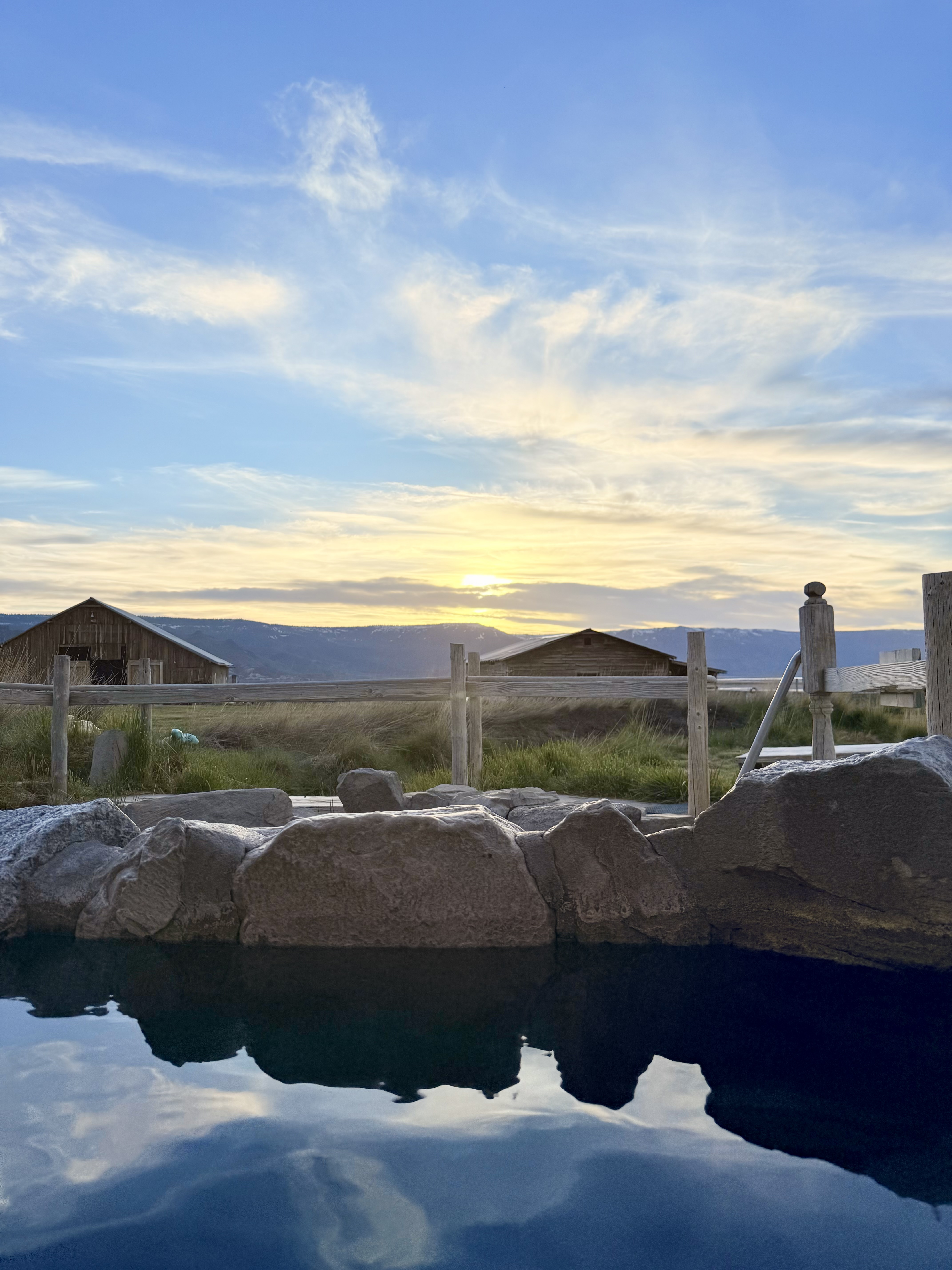
Set in the central southern part of Oregon on a high desert plateau rimmed by mountains, this northern part of the Great Basin has cracked earth, low shrubs, and shallow lakes that form from mountain snow melt that has no path to the sea.
The Bureau of Land Management (BLM) oversees 3.2 million acres of this area (approximately the size of Connecticut) which allows it to remain wild with sandhill cranes, tundra swans, pronghorn sheep, mule deer, coyotes, a cute little bird called a snowy plover, and Belding ground squirrels or sage rats. Affectionally called squeakers, these small rodents attract larger predators like badgers that damage fields, causing perilous conditions for horses and cows. There is no permit required to hunt squeakers, so it has become a popular recreational activity particularly in the spring. Varmint hunting in the Oregon Outback is big business and kids as young as 8 with a .22 rifle can participate.

This area is also popular for its relaxing hot springs. Summer Lake near Paisley, Oregon is a seasonal wetland and leftover from a great sea covering this area in prehistoric times. Besides the ancient fossils and home to the largest international Dark Sky Sanctuary, the ongoing volcanic geothermal activity resulting in therapeutic hot springs is a great reason to visit the Oregon Outback. I spent three days here amidst the quiet days and starry nights, surrounded by snow capped mountains and lovely soaking pools. I will definitely be back.
Visit Summer Lake Hot Springs – quaint cabins, full hookup RV sites, and dry camping, plus 24 hour access to the soaking pools.
